
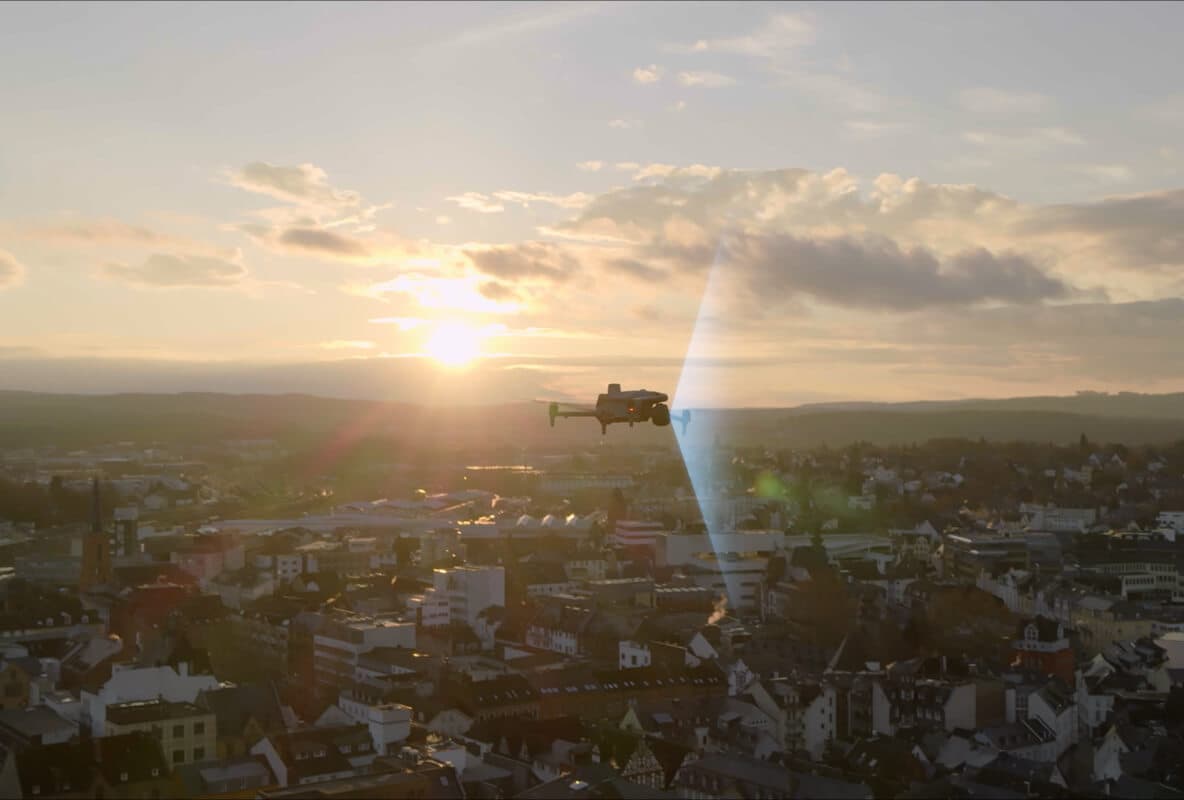
Autonomous drone docking stations — systems that house a drone in a weatherproof base station and launch automated missions on schedule or on-demand — represent the next major evolution in commercial drone operations. For operators managing large-scale infrastructure, remote sites, or critical assets requiring continuous monitoring, drone docks eliminate the need for an on-site pilot while providing persistent aerial intelligence.
What Is a Drone Docking Station?
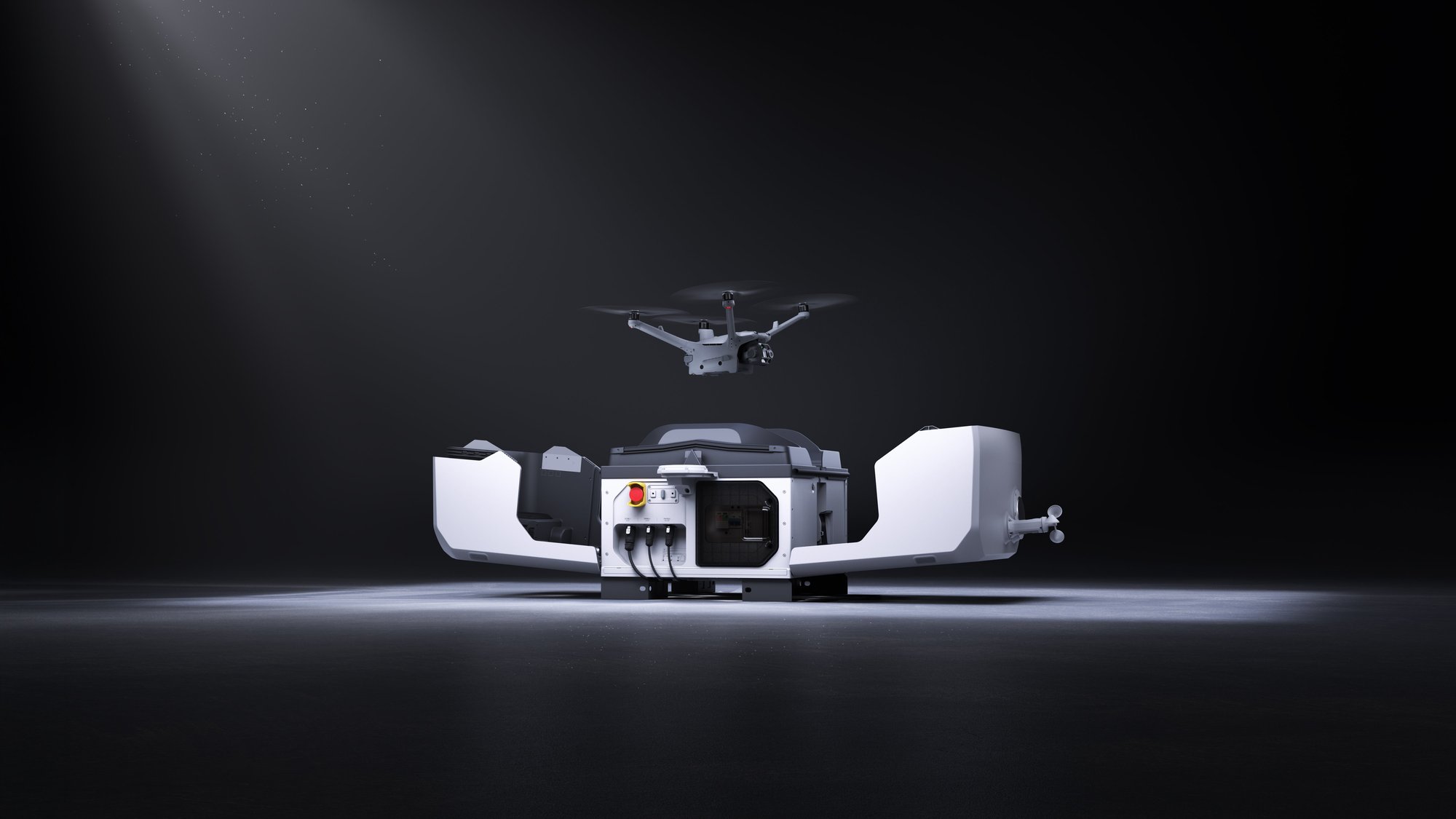
A drone dock is a ground-based autonomous system comprising:
- Weatherproof enclosure — houses the drone in a controlled environment, charges batteries, and protects from weather
- Precision landing system — RTK GPS and vision-based alignment for millimeter-accurate dock returns
- Communications link — 4G/5G connectivity for remote command and control
- Scheduling software — automated mission planning and execution without human intervention
The operator monitors missions from a remote command center — hundreds or thousands of miles away — reviewing footage and data after each automated flight.
DJI Dock 2 — Features and Capabilities
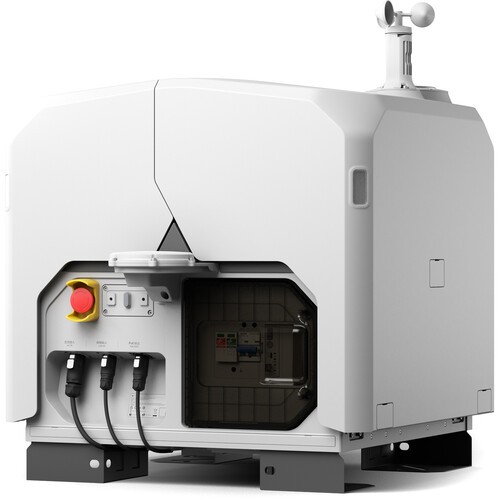
DJI's second-generation autonomous dock represents the current benchmark for commercial drone dock systems:
- IP55 weatherproof enclosure — operates in temperatures from -20°C to 45°C, rain, and wind
- 25-minute rapid charging — 0-90% charge in 25 minutes enables multiple daily missions
- RTK precision landing — centimeter-accurate autonomous return and landing
- 4G Enterprise Dongle — remote command and control over mobile networks (no line-of-sight required)
- 55-minute flight time — the Matrice 3TD dock variant delivers 55 minutes of flight per mission
- Temperature-controlled enclosure — batteries maintained at optimal temperature for immediate readiness
Compatible platforms: DJI Matrice 3D (mapping) and Matrice 3TD (thermal + mapping)
Key Use Cases
Critical Infrastructure Perimeter Security
Utilities, water treatment facilities, ports, and petrochemical plants use drone docks for automated perimeter surveillance. Pre-programmed routes cover fence lines and critical assets on a scheduled basis, with thermal anomaly alerts and unauthorized intrusion detection.
Solar Farm and Wind Turbine Monitoring
A drone dock at a utility-scale solar farm enables weekly or even daily thermal surveys of the entire facility — without sending a crew to the site. Anomalies detected by AI analysis automatically trigger alerts to the operations and maintenance team.
Power Line Corridor Monitoring
Transmission line operators deploy drone docks at strategic points along power line corridors to conduct automated visual and thermal inspections after storms, during fire season, or on scheduled maintenance cycles.
Emergency Response
Drone docks can be pre-positioned at emergency response staging areas and activated immediately — providing real-time aerial situational awareness to incident commanders without waiting for a drone pilot to arrive on scene.
Operational Requirements
FAA Compliance for Automated Drone Operations
Autonomous drone dock operations require specific FAA authorization beyond standard Part 107:
- BVLOS (Beyond Visual Line of Sight) COA — Required for any autonomous operation where the drone flies beyond the operator's direct visual sight. The FAA BEYOND Program and several Regional Drone Test Programs offer streamlined pathways to BVLOS authorization.
- Remote ID compliance — The drone and dock system must broadcast Remote ID during automated flights
- Airspace coordination — Operations in controlled airspace near airports require LAANC authorization or a Letters of Agreement with the relevant ATC facility
Connectivity Requirements
Drone docks require reliable 4G/5G connectivity or a dedicated point-to-point link for command and control. Site surveys are recommended before dock deployment to confirm adequate signal strength.
Cost Analysis: Drone Dock vs. Traditional Inspection
| Operation | Traditional Approach | Drone Dock Approach |
|---|---|---|
| Monthly perimeter surveillance (critical infrastructure) | $15,000-25,000 (manned patrols) | $3,000-6,000 (dock + monitoring) |
| Post-storm power line assessment | $8,000-15,000 per event (manned helicopter) | $500-1,000 per event (automated drone) |
| Solar farm weekly thermal survey | $2,000-4,000 per survey (contractor) | $200-400 per survey (automated) |
DJI Dock 2 systems are available through NOVVX with full installation, commissioning, and FAA compliance support. Contact our enterprise team for site-specific consultation.