The Silent Problem with Solar Panel Maintenance
Solar panel degradation is invisible to the naked eye. A panel performing at 60% capacity looks identical to a panel at 100%. Hot spots — caused by cell microcracks, soiling, or junction box failures — spread gradually. By the time you can see damage on the ground, you have already lost significant generation capacity and may be facing a cascading failure across the string.
Traditional inspection methods: infrared handheld from ground level, or climbing each panel row with a thermal camera. Both methods are slow (1-2 MW per day) and incomplete (ground-level IR misses angle-dependent hotspots).
Thermal Drone Inspection Workflow
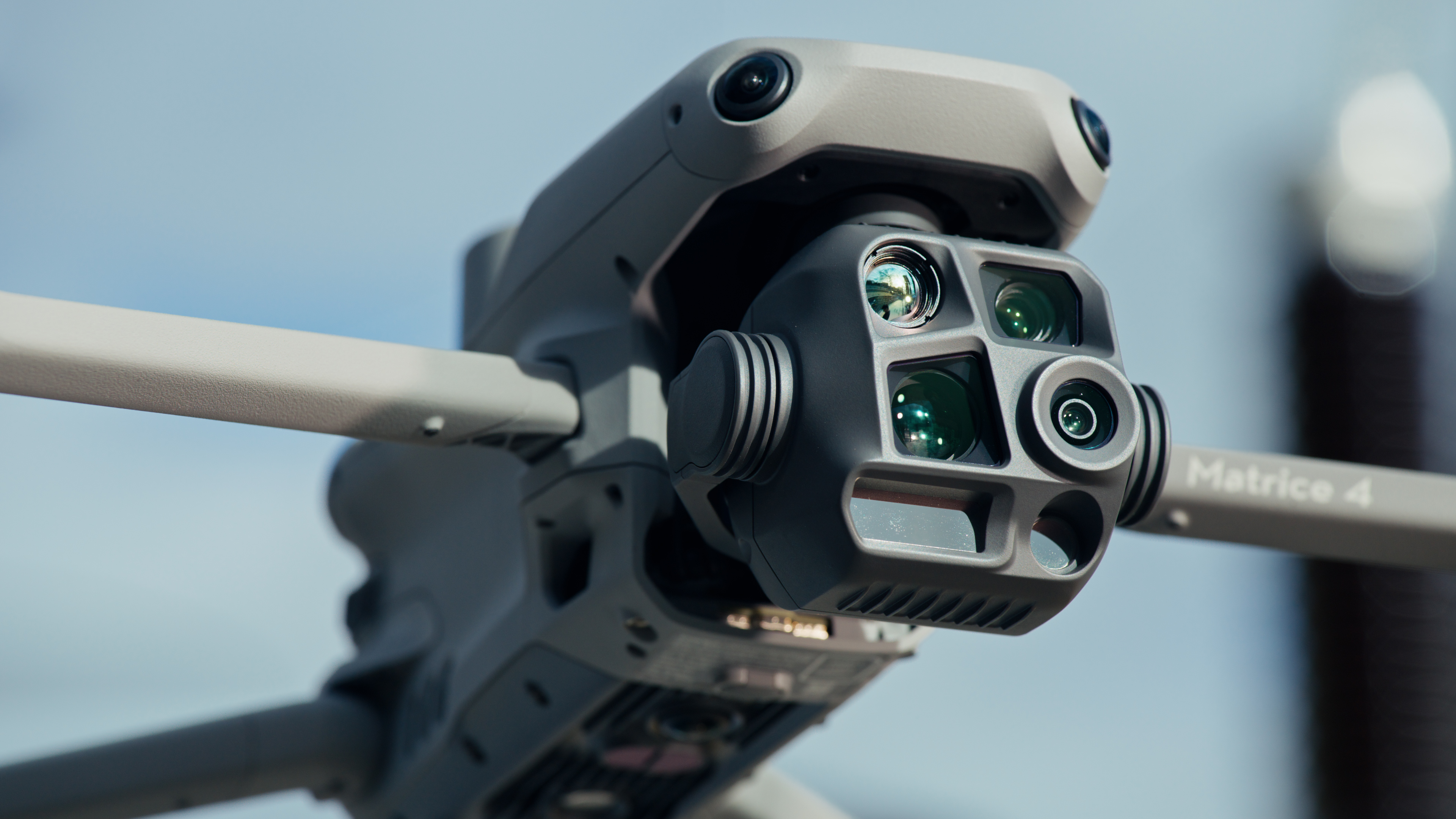
A DJI Matrice 4T equipped with thermal + visual cameras can cover 50-100 acres per hour at 30m altitude, capturing both radiometric thermal data and 4K visual imagery simultaneously.
The workflow:
- Grid flight planning — DJI Pilot 2 maps the solar farm with waypoint grids
- Automated flight — Matrice 4T flies the survey autonomously, day or night
- Real-time thermal stream — operator monitors for anomalies during flight
- Post-flight analysis — radiometric data imported into DJI Terra or third-party PV analysis software (SolarFloat, Heliotrope, SkySpecs)
- Report generation — GPS-tagged anomaly coordinates for field repair teams
What Thermal Inspections Find
Common failure modes detected by thermal drone surveys:
- Hot spots: individual cells or strings running 10-30°C above ambient — indicates cell damage or debris shading
- Open-circuit strings: entire string appears cooler than surrounding panels (no current = no heating)
- PID (Potential Induced Degradation): cluster failures often related to grounding issues
- Bypass diode failures: characteristic thermal patterns at junction boxes
- Vegetation encroachment: plants growing under panels, causing shading and hot spots
ROI Case Example: 50 MW Utility-Scale Farm
Based on industry data from drone inspection service providers:
- Inspection cost: $2,500-4,000 per pass (contractor with Matrice 4T)
- Anomalies found per survey: 200-400 flagged panels (5-10% significant)
- Power recovery per repaired panel: 50-200W per panel, depending on degradation severity
- Annual revenue recovery per MW: estimated $1,200-3,000 in recovered generation
For a 50 MW farm: annual inspection at $25,000 recovers $60,000-150,000 in lost generation — 2.4x to 6x ROI on the inspection cost alone.
NOVYX Solar Inspection Packages
We offer two paths for solar operators:
Option A — Inspection service: We connect you with certified thermal inspection operators in your region who fly the survey and deliver a GPS-tagged anomaly report. Starting at $2,500 per 50 MW.
Option B — Do-it-yourself: Purchase a DJI Matrice 4T package ($9,500-12,000 depending on configuration) plus DJI Terra software ($2,700/year). ROI-positive if you inspect more than 3 farms per year.
Contact our energy team to discuss which approach fits your portfolio size and inspection cadence.